The Odyssey
Twelve ships leave Troy carrying roughly six hundred men. Ten years later, one walks up the beach at Ithaca. This is where the other five hundred and ninety nine went.
The only guess is the starting number
The Iliad lists twelve ships under Odysseus, and a ship of that period carried about fifty men. Six hundred is an inference, not a line of verse. Every figure on this screen rests on it, so it is worth saying out loud before the first man dies.
What Homer does count, precisely and repeatedly, is the losses.
The voyage is books nine to twelve, told out loud by the only man who came back. Book five picks him up seven years in, and the poem opens there.
Twelve ships is in the Iliad’s catalogue. Fifty is what a hull that size carried. The product of the two is nowhere in either poem, which is why every number after this one carries an about.
Every mark is one man. The counter above the map takes them away one stop at a time, and four fifths of them go at a single stop.
Troy
The fleet is whole. Twelve hulls, a following wind, and a straight line home across the Aegean that a competent crew sails in a week.
Every number in this frame only goes down from here.
They stayed to loot
Odysseus sacks the city of the Cicones and gives the order to leave. The crew refuses. They stay on the beach drinking wine and slaughtering cattle, and at dawn the neighbours arrive from inland with cavalry.
Six men from every ship. The first losses of the voyage are not caused by a monster or a god. They are caused by men who would not get back in the boat.

Nobody dies here
A storm off Cape Malea drives the fleet south for nine days, off the edge of the known world. The scouting party eats the lotus, forgets the way home, and has to be dragged back to the benches in tears.
The counter does not move. Not every disaster in this poem is measured in bodies, and a chart that only tracks deaths will tell you this stop was uneventful. It was not.

Six men, and he asked for it
The ships are stocked. There is food, water and no reason to land. Odysseus takes twelve men into a cave anyway, because he wants to see what kind of creature lives there.
Polyphemus eats six of them, two at a time, over three meals. This is the first loss on the voyage that belongs entirely to the hero.
Within sight of the fires
Aeolus hands him a bag containing every wind except the one that blows him home. Nine days of steady sailing later, Ithaca is close enough to see the watch fires on the shore.
Odysseus falls asleep. The crew opens the bag looking for gold. The fleet is blown all the way back across the map, and the god refuses to help a man so obviously cursed.
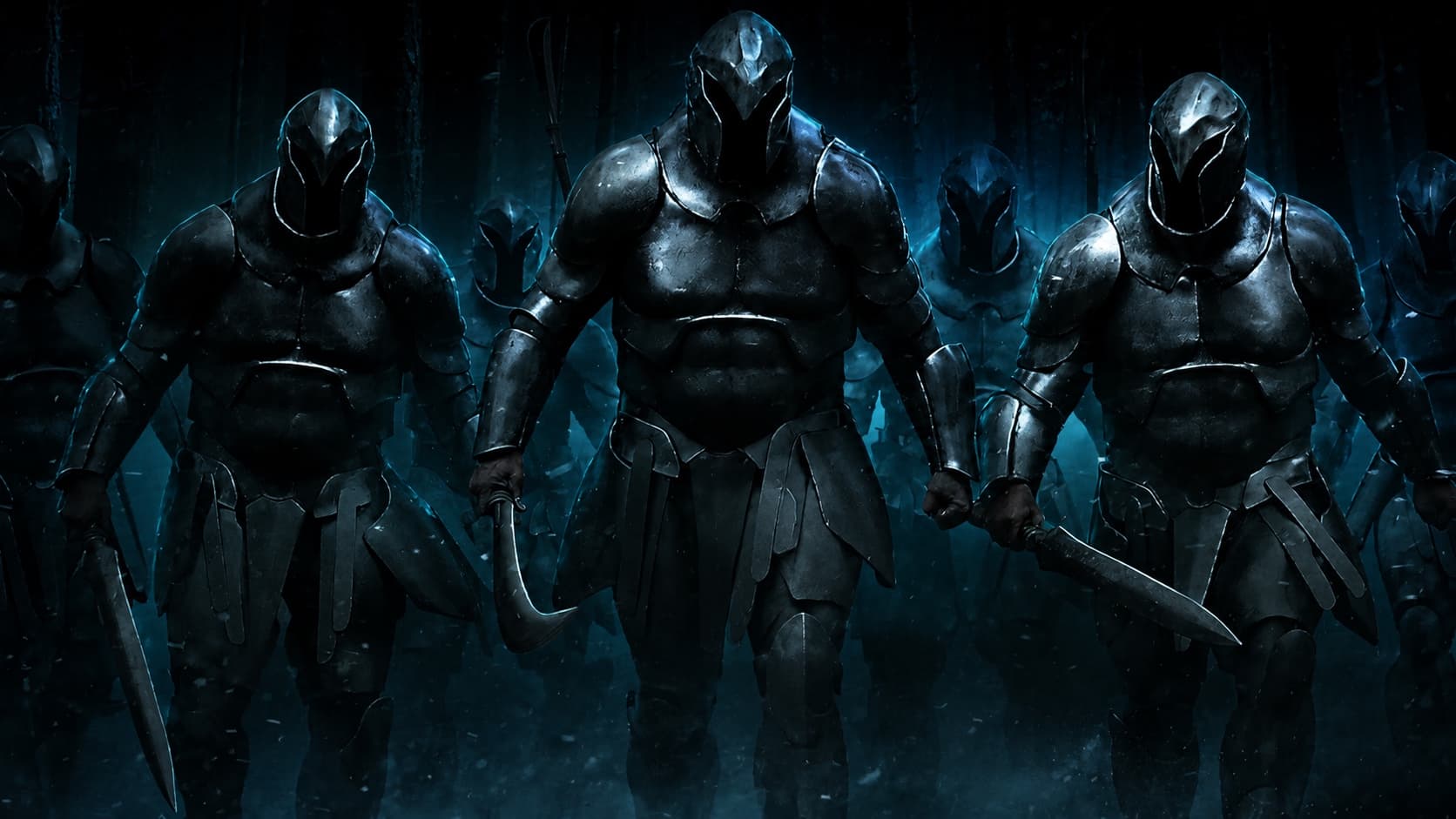
Eleven ships in one afternoon
The fleet moors inside a narrow harbour walled by cliffs. Odysseus alone keeps his ship outside, tied to a rock at the entrance, and that suspicion is the only reason this story has a narrator.
The Laestrygonians stand on the cliffs and break the hulls with boulders, then spear the men in the water like fish. Four hundred and seventy nine men, in the time it takes to read this paragraph.
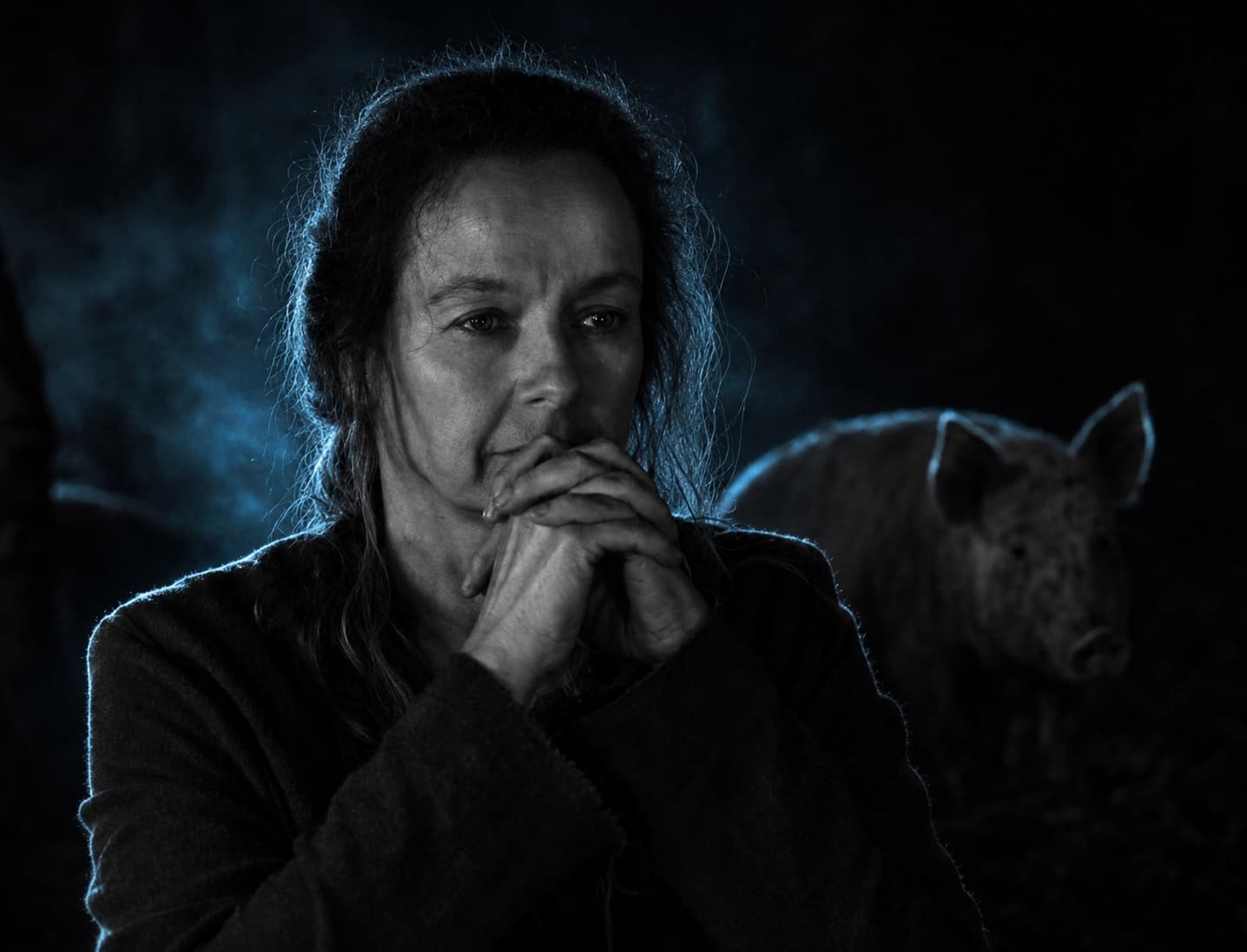
Then they stay a year
Circe turns the scouting party into pigs, is talked out of it, and feeds them instead. Only one man dies on this island. Elpenor falls asleep drunk on the roof and breaks his neck on the way down, and nobody notices he is missing until they meet him again in the underworld.
Then they stay. A full year of feasting before the crew has to talk Odysseus into leaving. Eight of the ten years of this journey are spent not travelling at all, on two islands, with two goddesses. Watch what the map does with that.
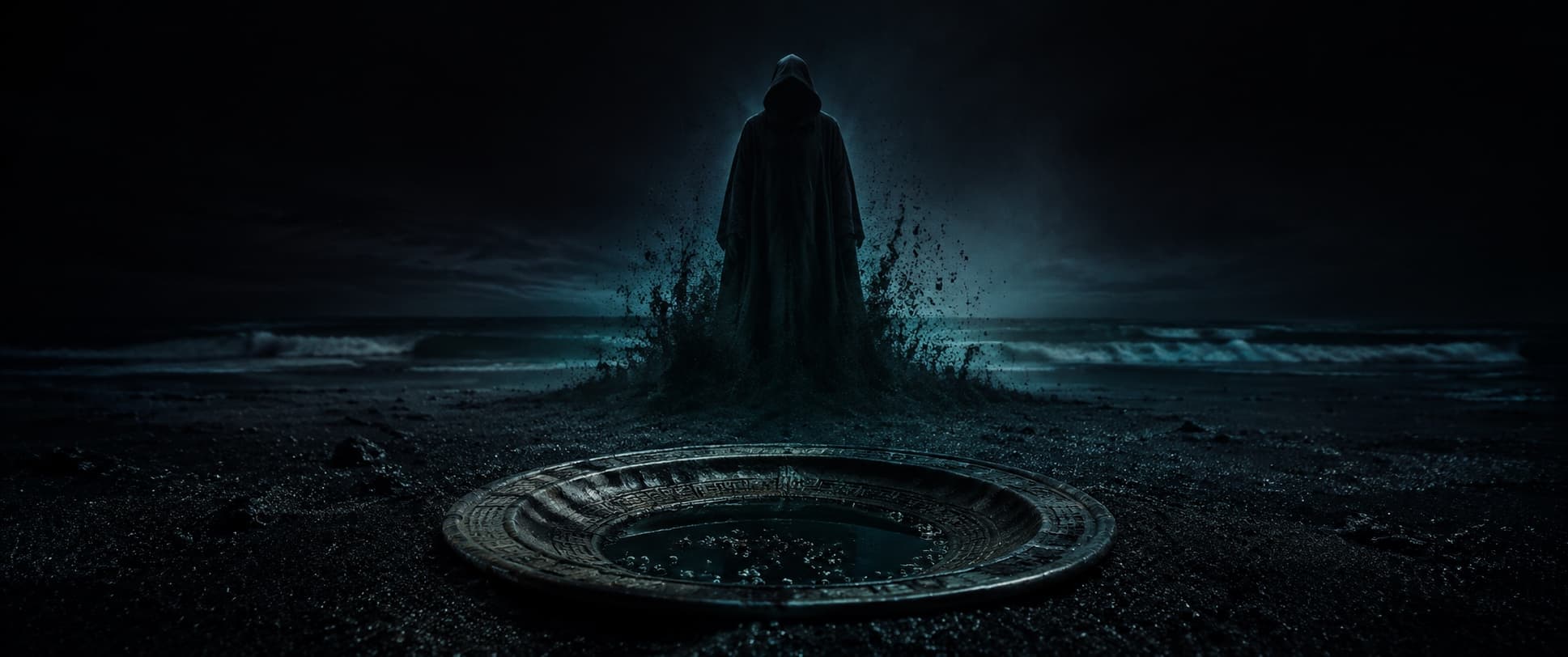
Off the edge of the map
Circe sends him to consult a dead prophet. He sails west until the sea runs out, to a shore of fog where the sun never shows, digs a pit and lets the dead drink from it. His mother is there. She died waiting for him, and nobody at home knows whether he is alive.
There is no honest place to put this stop on a map of the Mediterranean, so it sits at the edge of the frame on a broken line. A dashed line is always an admission.
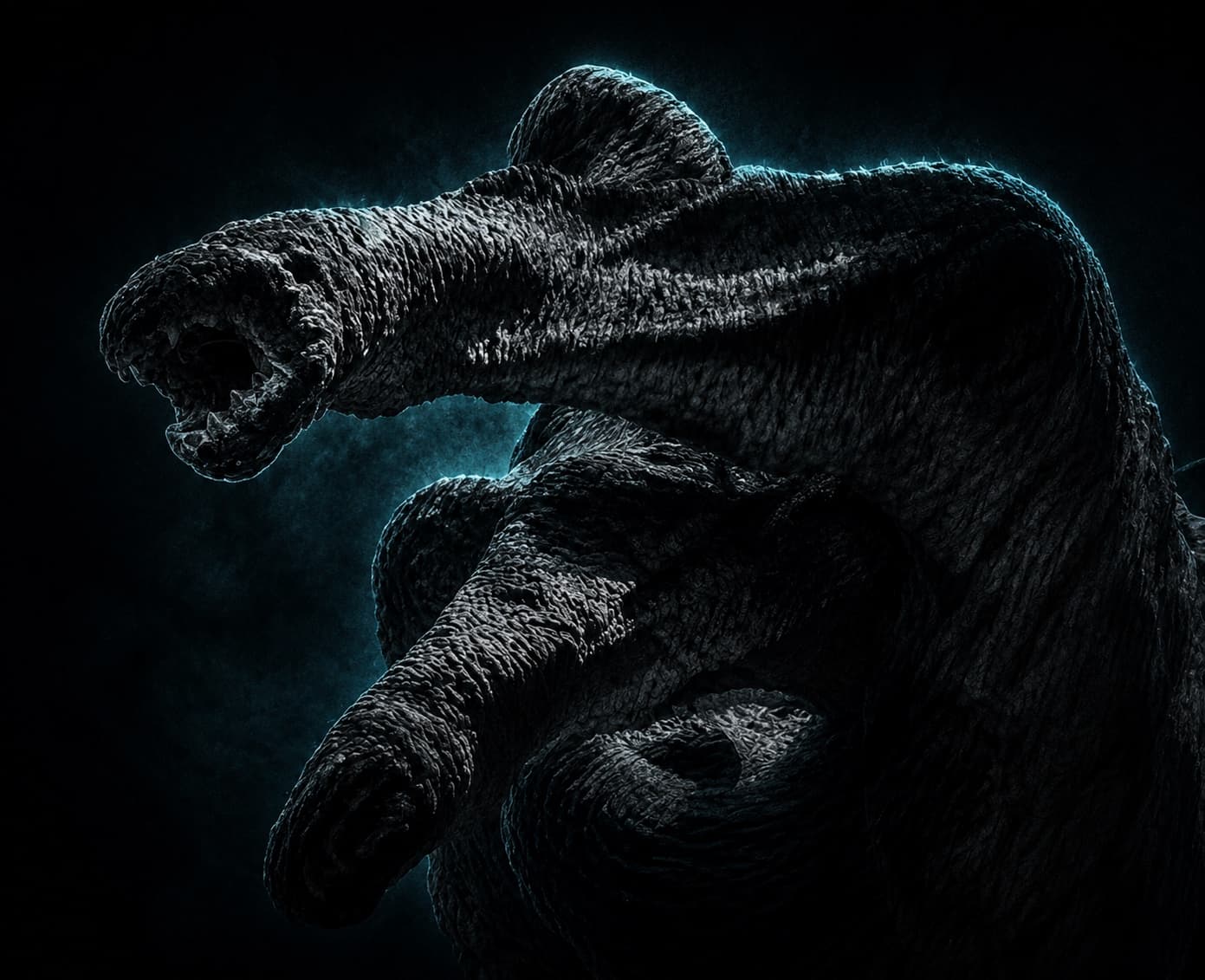
He knew, and he said nothing
Past the Sirens first, tied to his own mast with the crew’s ears stopped with wax. Nobody dies. Then the strait, a whirlpool on one side and a six headed thing in a cave on the other, and Circe has already told him exactly what it will cost.
He puts on his armour, takes the bow, and lets them row into it without a word of warning. The six who die are chosen by where they happen to be sitting.

Thirty five men and a herd of cows
One island left, with one condition attached: whatever else happens, do not touch the cattle. Then the wind pins them on the beach for a month and the supplies run out. Odysseus walks inland to pray and falls asleep, and while he sleeps the crew takes the best of the herd.
They eat for six days. On the seventh the wind turns, and the moment the island drops out of sight Zeus splits the ship with a thunderbolt. Everyone drowns except the man who was asleep on the hill.
Seven years, zero distance
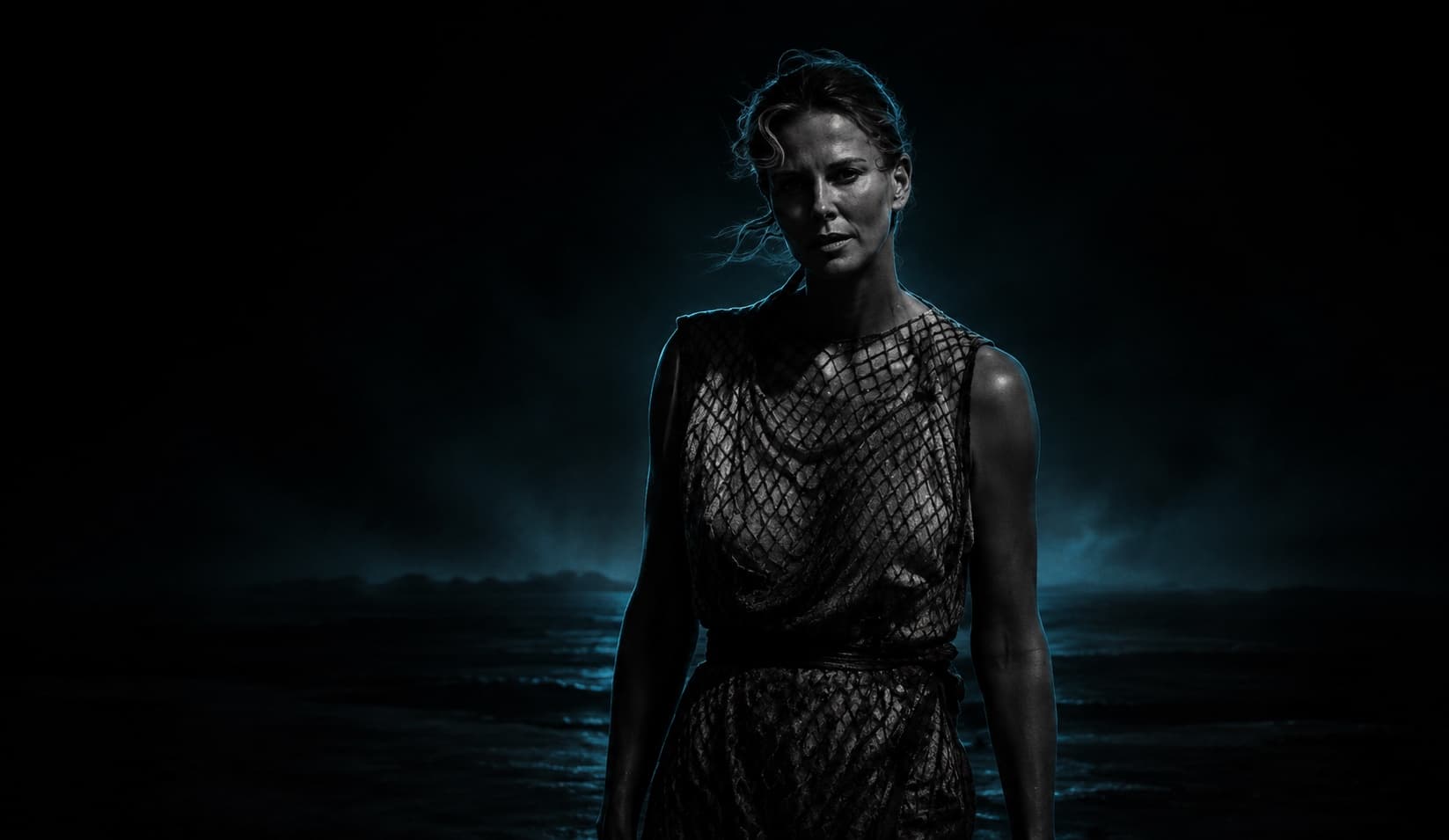
He lashes the mast to the keel, is dragged back through the whirlpool, and drifts for nine days to an island with one inhabitant. Calypso keeps him there for seven years and offers to make him immortal. He spends the days sitting on the shore, looking at the water.
Nothing on this map moves for seven years. More than half of a ten year journey happens at a single dot, and a map of distance has no way to show it. That is the best argument there is for putting a clock next to a map.
Look at the book number above this text. Everything from Troy to Thrinacia is book nine to twelve, because Odysseus is telling it himself over dinner. Ogygia is book five, four books earlier, and it is the first thing you have seen with your own eyes instead of hearing from him.
The last hosts
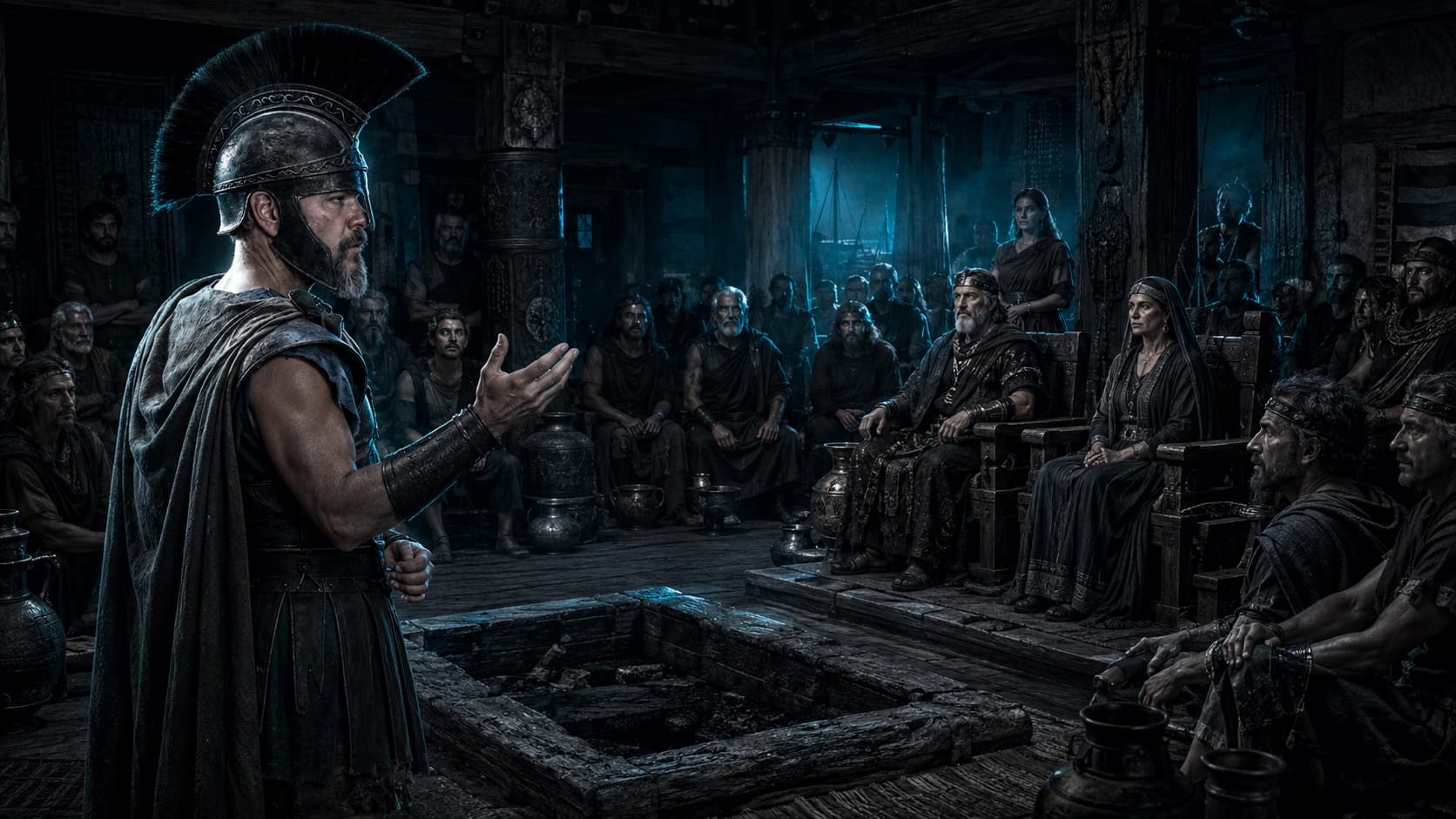
They find him naked on their beach, feed him, and ask nothing until he has eaten. Then they listen. Almost everything you have just scrolled through is Odysseus telling it out loud at their dinner table, which means the only source for the entire voyage is the one man who survived it.
They put him on a ship, asleep, and leave him on his own beach with a pile of gifts. Poseidon turns their ship to stone on the way home, for the crime of being helpful.
The counter turns around
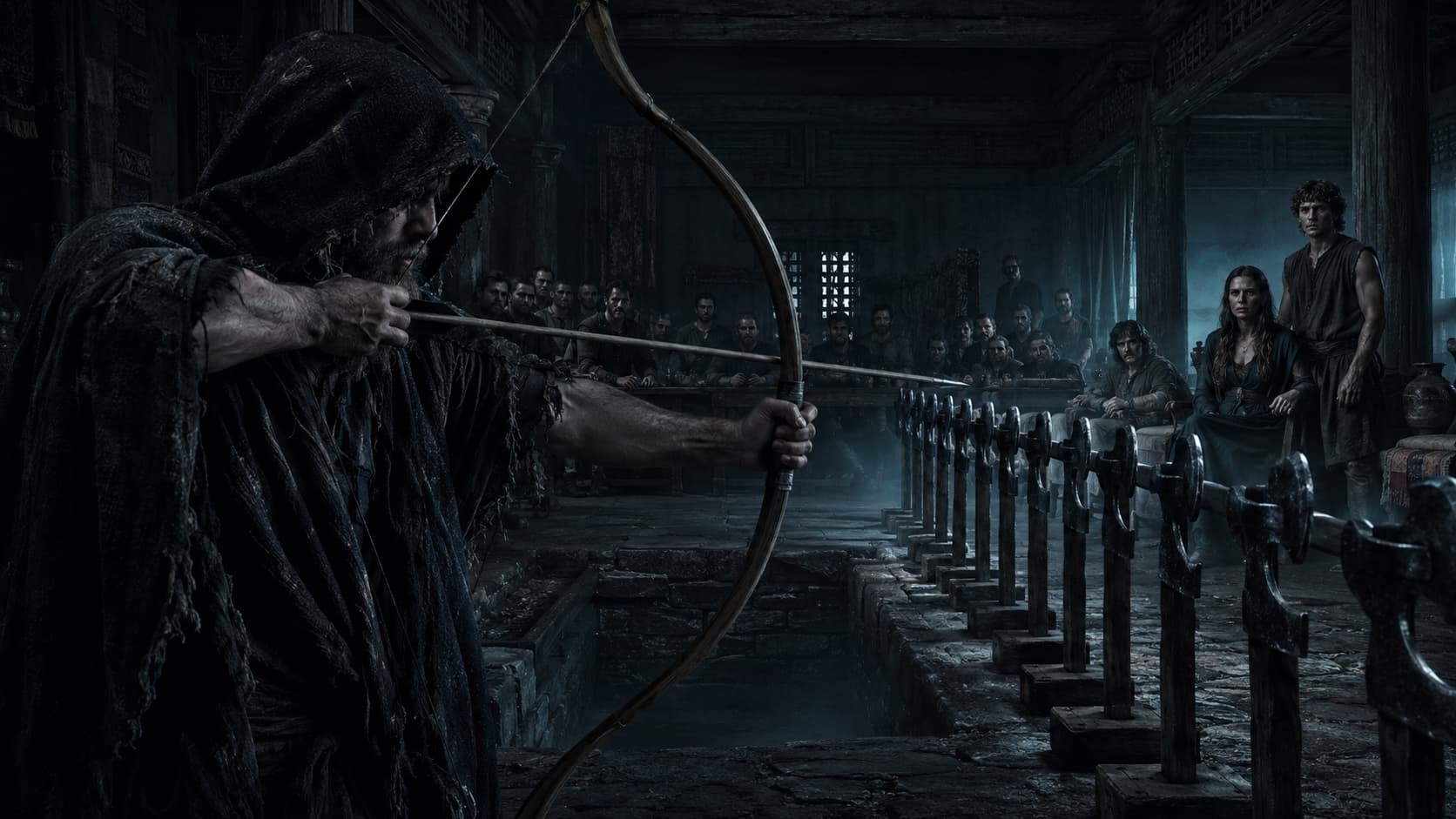
One hundred and eight suitors have been eating his herds for years. He bolts the doors of his own hall and, with his son and two herdsmen, kills every one of them. Then twelve of the serving women are hanged in the courtyard for sleeping with them.
One hundred and twenty dead in an afternoon, more than Ismaros, Polyphemus, Scylla and Thrinacia put together. The counter above the map has spent the whole voyage saying how many of his men were still alive. Here it counts the people he killed.
Twelve men to monsters
Twelve men are eaten one at a time by something out of a nightmare. Six in a cave, six in a strait. That is the whole monster tally, and it is the fourth bar down.
The rest die in bulk, and every one of those deaths turns on a decision somebody made. To moor twelve ships inside a harbour with one entrance. To stay on a beach after the order to leave. To eat the cattle they had been warned about.
Five hundred and ninety eight of them
Sorted by place, this is five bars and a harbour that dwarfs everything next to it. Sorted by whether anybody chose, it is two. Five hundred and ninety eight men die because of something a person decided to do, and the twelve a monster ate sit inside that number rather than beside it.
One man falls off a roof.
The Odyssey is remembered as a story about monsters. The count says it is a story about decisions.
What is measured and what is guessed
Homer counts the losses and never counts the crew. Twelve ships is in the Iliad. Fifty men is what a hull that size carried. Six hundred is those two multiplied, and it is the one number here that nobody wrote down. Everything on the screen rests on it.
Djerba for the lotus eaters, the Sicilian coast for Polyphemus, the strait at Bonifacio for the Laestrygonians, Gozo for Calypso, Corfu for the Phaeacians. These are traditional identifications. Serious scholars disagree about every one of them, and about whether the geography was ever meant to be read as real at all.
The underworld runs off the western edge on a dashed line. Homer puts it past the end of the world, so any dot on a coastline would be a lie. A dashed line is always an admission.
The hundred and eight suitors and the twelve women are Homer’s own figures. They are counted apart from the rest because they are the only deaths in the poem that Odysseus causes deliberately, at a time of his choosing, to people who are not trying to kill him.
The stops run in the order the voyage happened, which is not the order the poem tells them. The book numbers run forward to twelve, drop back to five, then jump to twenty two. That is the poem and not a mistake. The voyage is a flashback told by the only witness, and the poem opens closer to the end than to the beginning.
Four stays are spoken out loud: a month with Aeolus, a year with Circe, a month becalmed on Thrinacia, seven years with Calypso. Eight years and two months of the ten. Where the remaining two years go, the poem never says, so the gaps between the blocks are that remainder split evenly across the twelve crossings. The blocks are the poem. The gaps are arithmetic.
Every dot is the same size. Filled means men died there, hollow means nobody did. Sizing them by the body count would put a circle the width of Sardinia on the Laestrygonian harbour and shrink the rest to specks, because one stop holds four fifths of all the losses. That count belongs in the number and in the bars at the end, where it can be read honestly.
The second reading sorts the same men by one question: did somebody choose this. Five hundred and ninety eight land on the yes side, which is a wide category and deliberately so. The word is somebody and not Odysseus. At Ismaros the crew refuses the order to leave. In the Laestrygonian harbour eleven ships moor inside while he alone stays tied to a rock at the entrance. Putting those four hundred and seventy nine on his account would make a better story and a worse count.
The twelve a monster ate are drawn inside that bar and not beside it, because they are part of it. Giving them a bar of their own would show the same twelve twice, and the argument here is that the number is small.
Dit kan ook over jouw data gaan
Dit stuk vertrekt van een tekst van drieduizend jaar oud. Jouw data ligt dichterbij, en er zit even goed een verhaal in dat mensen pas zien wanneer je het hun toont. Wil je zoiets voor je organisatie, vertel me dan kort waar je staat.
Neem contact op